About ERMS
Enterprise Risk Management Solutions (ERMS) is an independent actuarial and risk advisory firm serving insurers, financial institutions, and public schemes operating in regulated environments.
We focus on strengthening financial reporting integrity, capital resilience, and risk governance through disciplined actuarial analysis and structured quantitative systems.
Our work supports boards, executive management, finance teams, and oversight functions in building frameworks that are transparent, defensible, and aligned with supervisory expectations. We combine technical rigor with practical execution across complex financial and risk environments.
Our Philosophy
We believe financial resilience is built through structure, clarity, and measurable discipline. Our engagements integrate:
- Actuarial science and accounting standards
- Capital modeling and forward planning
- Risk quantification and governance design
- Advanced modeling and decision-support systems
We do not focus on isolated calculations. We design coherent frameworks that strengthen underlying financial and risk architecture.
Independence & Standards
ERMS operates as an independent advisory practice. Our work is guided by:
- International actuarial standards
- Applicable financial reporting frameworks, including IFRS
- Regulatory and supervisory expectations relevant to each engagement
- Clear documentation and defensible methodologies
We emphasize disciplined assumptions, transparency, and clear documentation across all engagements.
Leadership
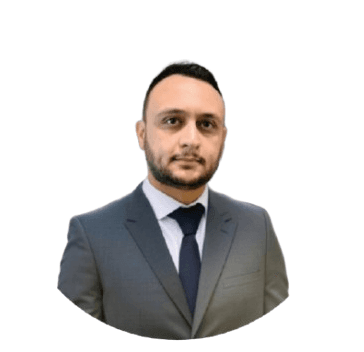
Elias Rahal, FSA, IFRI
Managing Partner
Elias Rahal is the Managing Partner of ERMS. He is a Fellow of the Society of Actuaries, with over 15 years of experience advising insurers, financial institutions, and supervisory bodies in regulated insurance markets. He also holds a certificate in International Financial Reporting for Insurers. He holds actuarial licenses and regulatory registrations in several regional jurisdictions.
His work spans strategic insurance advisory, capital and balance-sheet management, enterprise risk frameworks, product development, underwriting strategy, and advanced actuarial modeling. Across these areas, he has worked closely with insurers on product design and restructuring, pricing strategy, profitability improvement, capital allocation, and the broader financial and risk consequences of business and underwriting decisions.
Elias has also advised on major merger, acquisition, and portfolio transfer transactions, supporting boards and senior management through actuarial due diligence, reserve validation, capital impact assessment, and transaction-related analysis. His experience includes reinsurance structuring, balance-sheet optimization, and forward-looking capital planning under both base and stressed scenarios, with a strong focus on how technical actuarial work should inform management decisions at the highest level.
In financial reporting, he has supported insurers through IFRS 17 implementation, review, and post-implementation refinement, with particular emphasis on governance, explainability, and connecting technical outputs to strategic and financial decision-making. His work in this area combines actuarial depth with a clear understanding of reporting architecture, management use, and the discipline required to make complex results robust, interpretable, and decision useful.
At ERMS, he leads the firm with a focus on disciplined methodologies, quantified risk assessment, and integrated frameworks that connect underwriting performance, capital resilience, financial reporting, and long-term sustainability. His approach combines technical rigor with strategic perspective, helping clients address complex insurance challenges in a way that is analytically sound, commercially relevant, and defensible before management, regulators, auditors, and other stakeholders.

Myriam Sakr, ASA
Co-Founder and Partner
Myriam is an Associate of the Society of Actuaries (ASA) with a specialization in healthcare, group insurance, and other short term insurance lines, supported by a strong foundation in actuarial analysis, financial modeling, and large-scale data work.
Her experience combines technical actuarial capability with practical business insight, particularly in areas where product design, claims experience, cost behavior, and financial sustainability need to be assessed together rather than in isolation. Her work includes health and group product design, actuarial pricing, healthcare sustainability analysis, claims diagnostics, and cost evaluation, with a strong focus on using large datasets to identify patterns, explain performance, and support better decision-making.
She also has experience in predictive analytics, model development, database building, and reporting structures that improve the quality, consistency, and usability of actuarial and financial information. This includes work connected to healthcare economics, utilization dynamics, funding structures, and the design of healthcare systems and benefit arrangements.
In employee benefits, she supports IAS 19 end-of-service and defined benefit valuations, alongside broader financial modeling and reporting support.
At ERMS, she leads the healthcare and employee benefits practice, with particular strength in health, group, and data-intensive analytical work. Her approach emphasizes rigor, coherence, and practical relevance, helping clients gain clearer visibility into healthcare performance, insurance portfolio behavior, financial exposures, and the design choices that shape long-term sustainability.
Team & Capability
ERMS is supported by a network of qualified actuaries, analysts, and subject-matter specialists engaged based on project scope and technical requirements. This structure allows us to combine senior actuarial oversight with scalable analytical capability, ensuring engagements are technically rigorous, operationally efficient, and aligned with governance expectations.
Our Commitment
We work with institutions seeking structured, forward-looking financial and risk solutions grounded in actuarial expertise and disciplined analysis. Our objective is to support sustainable financial resilience, regulatory alignment, and informed decision-making.